
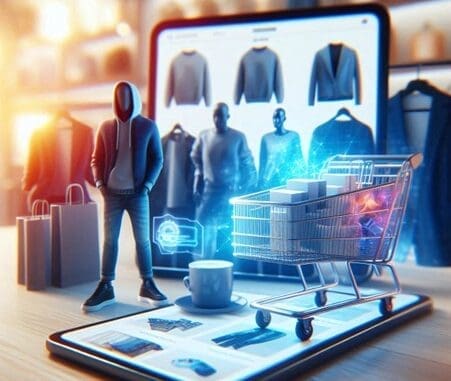
A New Era for Retail
Retail is changing faster than ever. What used to rely heavily on manual processes, face-to-face transactions, and historical sales data is now powered by artificial intelligence (AI), automation, and real-time analytics. Retailers’ technology is fundamentally transforming their operations and customer service, from cashier-less stores to predictive inventory systems.
Major players in the global market, such as Amazon and Walmart, have been utilizing AI-based systems to make their operations more efficient, offer more personalized shopping experiences, and increase the effectiveness of their supply chains. However, the transition to AI is not only a story of big companies, since even medium and small businesses are using smart technologies to stay in the game.
The future of retail management course will be defined by the wise combination of AI and automation. We will go through how these technologies are transforming the retail sector and what this means for the career paths of retail professionals.
AI-Powered Inventory Management
Inventory management has always been one of the biggest challenges in retail. Overstocking ties up capital, while understocking leads to lost sales and dissatisfied customers.
AI is solving this problem through:
- Predictive demand forecasting using historical sales data and real-time trends
- Automated stock replenishment systems
- Seasonal demand analysis
- Waste reduction strategies
AI technology examines a range of factors, including customer purchase patterns, weather forecasts, regional trends, and even emotions on social media platforms, to forecast what customers will buy. This is how retailers can have the right amount of goods on their shelves and minimize losing money.
Moreover, automation helps monitor a firm’s stock in real time across various venues, making it easy for warehouses and shops to work together smoothly.
Personalized Customer Experiences Through AI
Modern consumers expect personalized experiences. AI makes this possible at scale.
Retailers use AI to:
- Recommend products based on browsing behavior
- Send targeted promotions and offers
- Customize email marketing campaigns
- Improve chatbot-based customer service
For instance, some e-commerce platforms, such as Shopify, offer retailers embedded analytics services to identify customer preferences and buying behavior.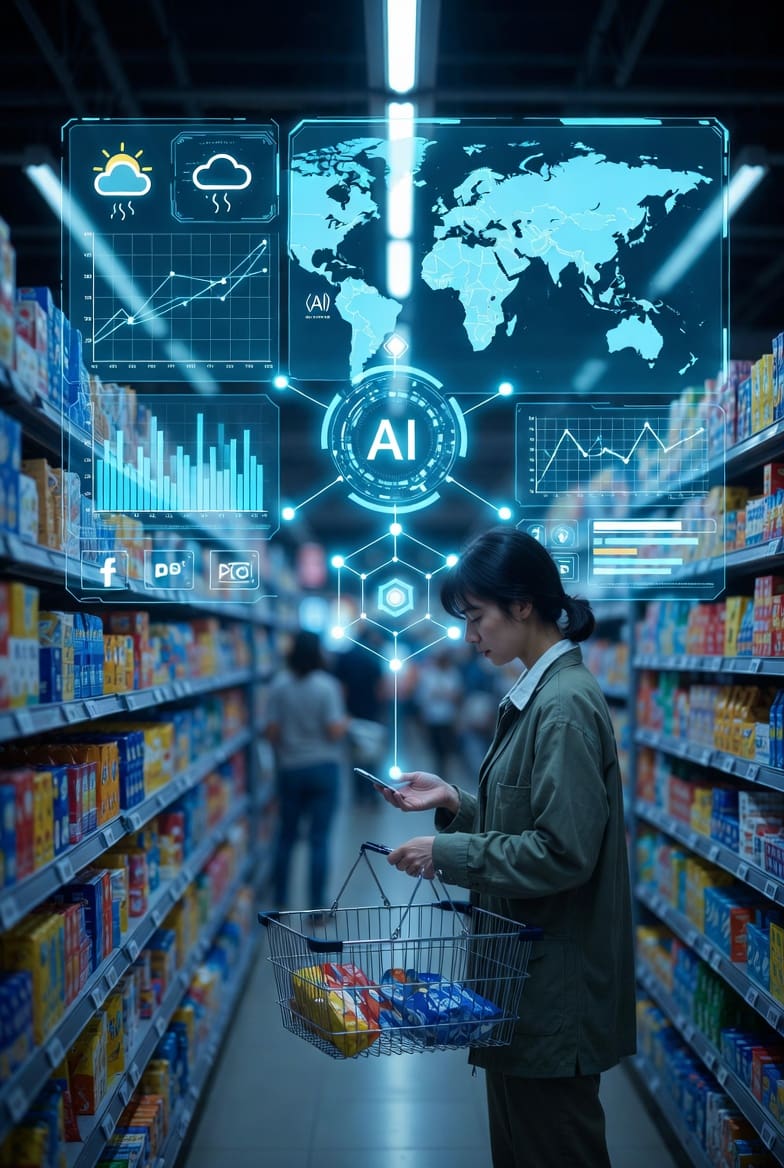
Firstly, personalization leads to higher customer satisfaction; secondly, it increases brand loyalty; and thirdly, it has a very positive effect on conversion rates. Moreover, shopping experiences tailored to individual needs to the extent that they are almost one-to-one communication scenarios will be commonplace, rather than marketing tactics that surprise and delight.
Automation in Supply Chain and Logistics
Automation is transforming the retail supply chain from end to end.
Key advancements include:
- Robotic warehouse systems
- Automated sorting and packaging
- Smart delivery tracking systems
- AI-driven route optimization
Automated warehouses can minimize human error, improve order precision, and expedite delivery.
It has become possible for retailers to handle complex logistics networks more efficiently than ever before.
Smart Stores and Cashier-Less Technology
Brick-and-mortar retail is not disappearing—it is evolving. Smart stores are blending digital innovation with physical shopping experiences.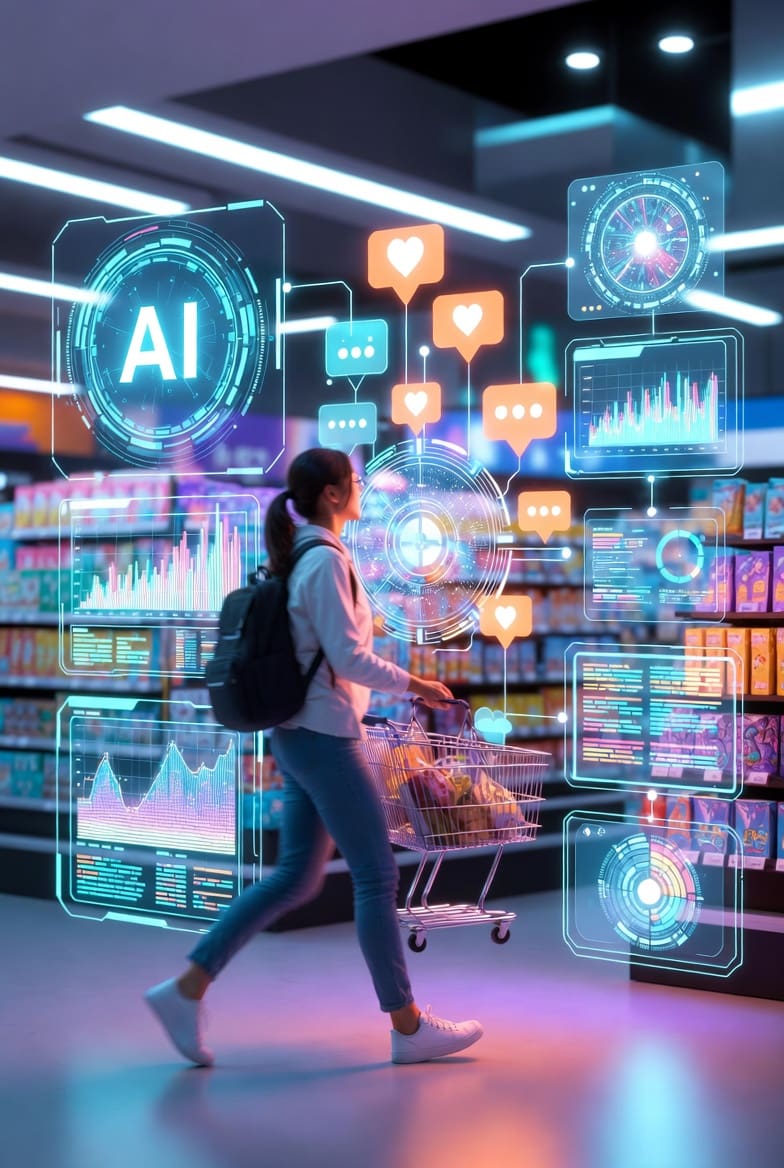
Emerging technologies include:
- Self-checkout kiosks
- RFID-enabled product tracking
- Smart shelves with real-time inventory updates
- Cashier-less checkout systems
AI sensors and automated systems powered stores drastically cut waiting times and make the whole experience very convenient. Customers getting in, picking up their items, and leaving without having to queue for a bill are the main advantages.
Such changes turn shopping in physical stores into a speedy, seamless, and data-driven experience.
Data-Driven Decision Making in Retail Management
Data is becoming the backbone of modern retail management. AI systems collect and analyze massive volumes of data to support smarter decisions.
Retail managers now rely on:
- Real-time sales dashboards
- Consumer behavior analytics
- Dynamic pricing models
- Performance forecasting tools
Instead of depending solely on intuition, managers can make evidence-based decisions backed by analytics. This improves operational efficiency and strengthens strategic planning.
As retail grows more technology-driven, professionals must understand how to interpret and apply data insights effectively.
The Changing Role of Retail Managers
AI and automation are not replacing retail managers—they are redefining their roles.
Future retail leaders will need to:
- Understand AI tools and analytics platforms
- Manage digital transformation strategies
- Oversee omnichannel operations
- Focus on customer experience innovation
- Lead tech-driven teams
While traditional management skills are still very much needed, digital know-how is also becoming just as crucial.
Those students and professionals who wish to take this path may find that a Retail Management Course equips them with the core concepts of merchandising, operations, and customer service. Besides, a Retail management course online facilitates learning at one’s own pace and brings in topics of the day, such as AI, automation, and digital retail strategies.
Knowing how to use the latest retail tech will be a big help in advancing one’s career in the near future.
Benefits of AI and Automation in Retail
The integration of AI and automation delivers several long-term advantages:
- Improved operational efficiency
- Reduced human errors
- Enhanced customer satisfaction
- Lower operational costs
- Better forecasting accuracy
- Increased profitability
Retailers that adopt these technologies early gain a significant competitive advantage in a rapidly changing market.
Challenges to Consider
Despite the benefits, retailers must also address certain challenges:
- High initial investment costs
- Data privacy concerns
- Employee reskilling requirements
- Technology integration complexities
Successful implementation requires strategic planning, proper training, and a clear long-term vision.
The Road Ahead: What the Future Looks Like
The future of retail management will be driven by intelligent systems, automated operations, and seamless omnichannel experiences. AI will continue to evolve, enabling:
- Voice-based shopping
- Predictive shopping experiences
- Fully automated supply chains
- Advanced customer sentiment analysis
Retail businesses that embrace innovation while maintaining strong customer relationships will thrive in this evolving landscape.
Conclusion
The retail sector is currently undergoing a significant transformation of the kind not seen in decades. AI and automation are no longer just buzzwords in the industry but have now taken center stage in retail management innovation. Through predictive inventory management systems, personalized customer shopping experiences, and automated logistics, technology is, in fact, reinventing the retailers’ way of doing business and competing.
For young retail professionals, becoming familiar with these technological changes is indeed a must, not just an option. Whether one pursues a Retail Management Course at a university or online, it remains a valuable preparation for individuals who wish to be leaders in the technology-driven era.
As AI continues to evolve, it is retailers who smartly integrate innovation with customer-focused tactics who will set the standard for the next generation of retail success.
Be the first to comment