
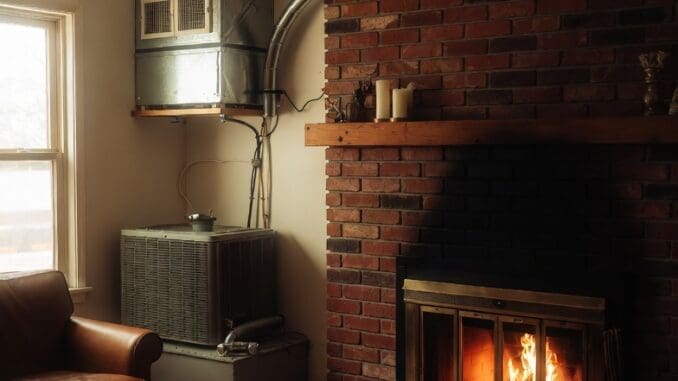
You can turn up the thermostat, schedule furnace service, and still end up sitting in a room that feels oddly cold. That disconnect isn’t in your head, it’s the result of how your body responds to air movement, surface temperatures, and heat loss. Understanding why warm rooms feel cold starts with how temperature is actually experienced, not how it’s measured.
Why Perceived Temperature Matters More Than the Thermostat
Perceived temperature is how warm or cold your body actually experiences a space, not what the thermostat measures. This perceived temperature (sometimes called apparent temperature) reflects how your body reacts to the environment as a whole. A thermostat only reads air temperature at one point on the wall, while your body continuously evaluates indoor air movement, surface temperatures, humidity, and heat loss from your skin.
That’s why a room can technically be 72°F and still feel chilly. If nearby walls, windows, or floors are cold, your body radiates heat toward them. You’re losing warmth even though the air itself is “warm,” so your brain interprets that heat loss as cold. The apparent temperature you feel is lower than the measured temperature.
In short, thermal comfort isn’t about the number on the thermostat, it’s about how quickly your body is losing heat. Your body constantly releases warmth, and when that heat is lost faster than expected, through cold surfaces, indoor air movement, or dry air, your nervous system interprets the space as cold regardless of the thermostat reading.
How Indoor Air Movement Changes Warm Rooms
Indoor air movement speeds up heat loss from your skin. Even gentle airflow replaces the thin layer of warm air your body naturally creates around itself. Once that protective layer is disrupted, your body sheds heat faster, and your perceived temperature drops.
This is why a room with still air can feel cozy at a lower temperature, while a room with moving air can feel cold at the same setting. Your nervous system doesn’t detect “wind” indoors, it detects accelerated heat loss. Thermal comfort isn’t about how warm the air is, it’s about how fast warmth leaves your body due to indoor air movement.
Why Quiet Airflow Creates a Cold Drafty Room
Because your skin is incredibly sensitive to temperature changes, you can feel airflow even when your ears and eyes don’t notice it. Slow, laminar indoor air movement, the kind that slides along floors or walls, doesn’t whistle, flap curtains, or make noise, but it constantly strips heat from your body.
This type of airflow often settles near floors, exterior walls, or windows and operates continuously, commonly due to leaky building envelopes or poorly sealed ductwork. Because it’s quiet and subtle, your senses don’t register “air movement”, they only register discomfort.
The result is a cold drafty room that feels persistently uncomfortable without any obvious draft source. Even though the thermostat says it’s warm, the perceived temperature remains low, which makes the experience especially frustrating.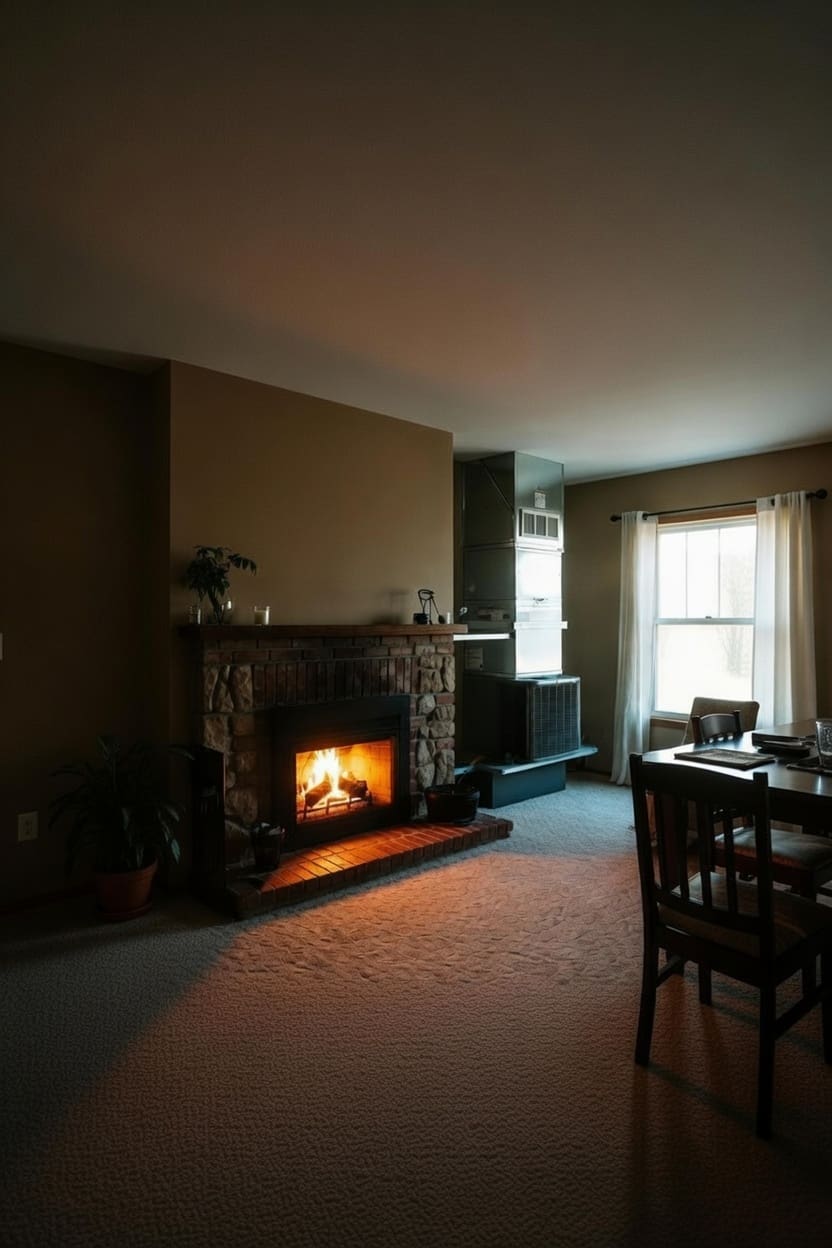
Indoor Air Movement and Thermal Comfort Explained
Your body loses heat in four main ways: radiation, conduction, evaporation, and convection. Indoor air movement directly increases convection, the transfer of heat from your skin to the surrounding air, which has a major impact on indoor thermal comfort.
When air is still, heat loss slows down. When air moves, it acts like a conveyor belt, carrying your warmth away faster than your body can replace it. This is why airflow improves comfort in summer, and why it can destroy thermal comfort in winter if not properly controlled.
Indoor thermal comfort depends on maintaining a balance between heat production and heat loss. When airflow tips that balance toward faster heat loss, the apparent temperature drops even though the air temperature stays the same.
How Humidity Affects Perceived Temperature Indoors
Humidity affects how efficiently your body regulates heat and strongly influences perceived temperature. In dry indoor air, moisture evaporates more quickly from your skin, increasing heat loss and making the apparent temperature feel colder than it actually is.
Moderate humidity slows this evaporation process, helping your body retain warmth and improving indoor thermal comfort without raising the thermostat. This is why a properly humidified home at 70°F can feel warmer than a dry home at 73°F. Moist air doesn’t “hold heat”, it simply reduces how quickly your body loses it.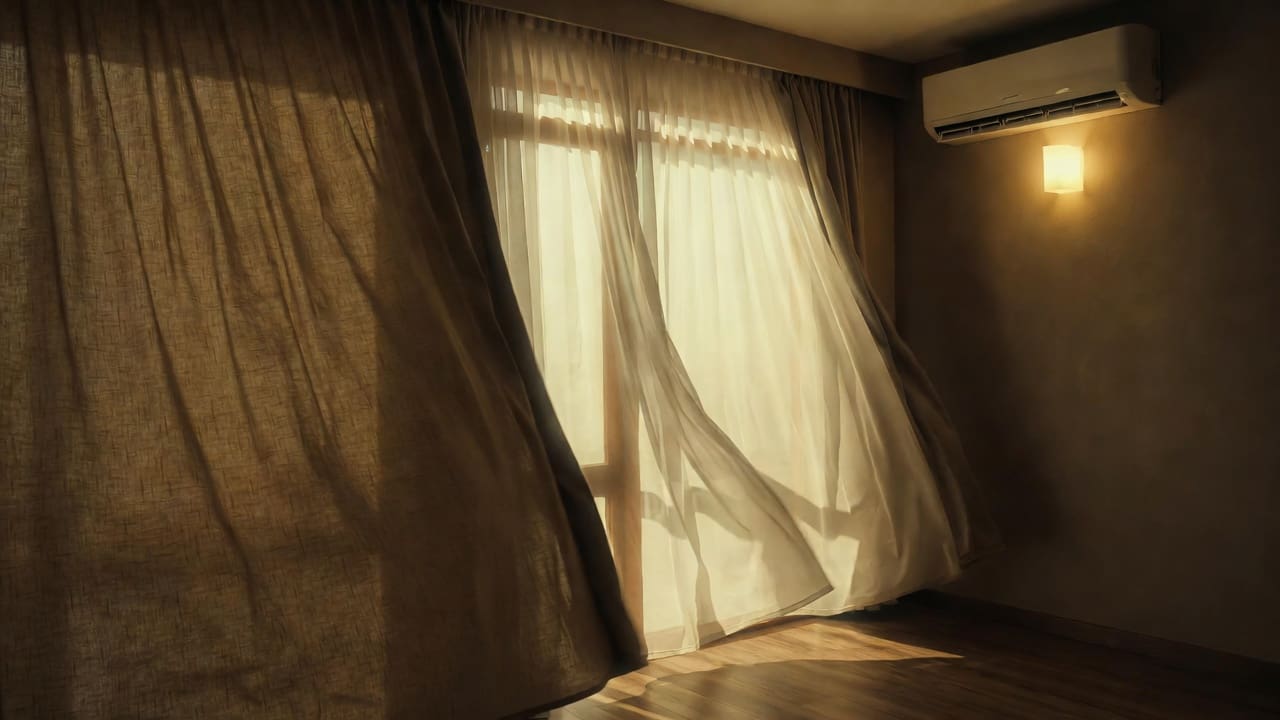
Why Perceived Temperature Varies Between Rooms
Because heating systems don’t control heat loss, only heat supply. Whether the heat comes from ducted air or a boiler, some rooms lose heat faster than others due to exterior walls, large windows, poor insulation, air leaks, or cold floors.
Even if two rooms receive the same amount of heated air, the one losing heat faster will always feel colder. The perceived temperature in each room depends on how well that space retains heat. Indoor thermal comfort is determined by heat retention, not just how much warm air enters the room.
How HVAC Issues Disrupt Indoor Thermal Comfort
HVAC systems, including the furnace, determine how evenly heat is delivered and how quickly it escapes. While they manage air delivery, true thermal comfort depends on how that air moves through the space. Poor vent placement can create indoor air movement directly across seating or occupied areas, increasing heat loss and lowering apparent temperature.
Unbalanced or leaky duct systems can overfeed some rooms while starving others, allowing warm air to escape and cold air to enter through windows, doors, attics, and other building gaps. These pressure differences pull cold air into living spaces, often creating a cold drafty room even when the system is running.
Oversized systems can heat too quickly, shutting off before surfaces warm up. This results in warm air but cold rooms, a mismatch that hurts indoor thermal comfort. When airflow, pressure, and heat retention aren’t balanced, perceived temperature suffers even if the heating system appears to be working fine.
Fixing a Cold Drafty Room Without Raising the Heat
This is where smart fixes outperform brute-force heating. Improving thermal comfort starts with reducing heat loss rather than making the air hotter. Sealing air leaks, improving insulation, adjusting vent direction, and maintaining proper humidity all help stabilize perceived temperature.
Circulating air gently, especially near floors, and avoiding indoor air movement directly across people reduces that persistent chilly feeling. Warming surfaces, not just air, plays a huge role in improving indoor thermal comfort, allowing heat to stay where it belongs, on surfaces and on your skin.
The goal isn’t hotter air, it’s slower heat loss. When your body keeps its warmth, apparent temperature rises naturally, and comfort follows without increasing energy use.
Be the first to comment